Showing posts with label weather and climate. Show all posts

April 26, 2008

Charlie's European Museum Crawl

After receiving 50 million kroner to our science center, our planning have changed from "dreams" to "reality". This also means that we are in a hurry. We need to gain as much experience in the field as possible, to be able to design and make a science museum worth visiting. The other day I stumbled across a very helpful blog named "Charlie's European Museum Crawl". Charlie Trautmann describes himself with these words:

I'm currently on sabbatical leave from my position as executive director of the Sciencenter, a hands-on science museum in Ithaca, New York. From July thru October 2007, I will be visiting a series of European museums to assess how they view their role in bringing environmental concerns to their audience.

In his blog he has written long reports from each museum/science center visited, describing housing, exhibitions, the quality of individual exhibits and more of the things insiders like to discuss. It is good reading for the general public as well, if you are one of those who like to include museums to your to-do-list when you are travelling.

Trautmann has also written a report from his travel, which can be downloaded from Sciencenter's webpages.

April 23, 2008

Waiting for the snow to disappear

This time of year is the least fun season in Tromsø. Knowing it is spring further south, makes it even more depressing to look outside and see snow everywhere. It varies from year to year when spring decides to show up. Anything from early April to early June is normal. This year it seems to become a late spring. The last weeks we've experienced 20-30 cm of snowfall on a daily basis. Luckily some of it thaws during the day, but we've gotten our share of excersize showeling snow.

One of the reasons I want a snowfree environment, is my discovery of a cool experiment in November last year. A couple of days before the winter kicked in, I learned about the micrometeorites. Dust from space fall to earth, tons of it every day. But every individual piece of stardust is too small or almost too small to see for the human eye. But with a magnification of just 20, they are easy to identify.

The meteorites we are talking about here are the iron-containing ones. When they enter the atmosphere, they melt and get a characteristic round shape which is easy to identify in a sample.

NASA and others have published lots about the topic, including photos and how-to's. The way I search for the extraterrestrial dust is the easiest one, I think. I use two plastic cups. Inside one of them I put a strong neodium magnet. The second cup I place on top of the magnet, locking it between the two cups. Then I tie strings to the cups in a triangular shape, allowing me to walk straight and hold the cups just centimeters above the ground. With this you're ready to hunt for the stardust, taking your cups for a stroll or three. The micrometeorites will be attracted to the magnet and stick to the bottom of the cups. To check if your sample contains the round beads, transfer it to a post-it note and look at it with 20x magnification or more. Good luck hunting!


October 03, 2007

A busy Science Week

The annual Science Days has come to an end, and it was a long stretch for us at the Science Center. We had two successful days at the Science Faire in Tromsø, and our booth was awarded as the second best presentation. A total of 5000 people visited the Faire these two days.


Our stall presented some simple ice experiments, focusing on the increasing meltdown of the Arctic icecap. And kids and adult alike could make their own UV critter for free. Luckily it was two sunny days, and the kids were running around outside the tent after visiting us, to test their UV beads.

SciencePub, a collaborative Polar Year science project between geologists, archeologists and science centers, shared the second place with us. Being a member of the SciencePub project, it was a tribute to us as well. They had a sandbox where kids could excavate real archeological items found in Northern Norway.

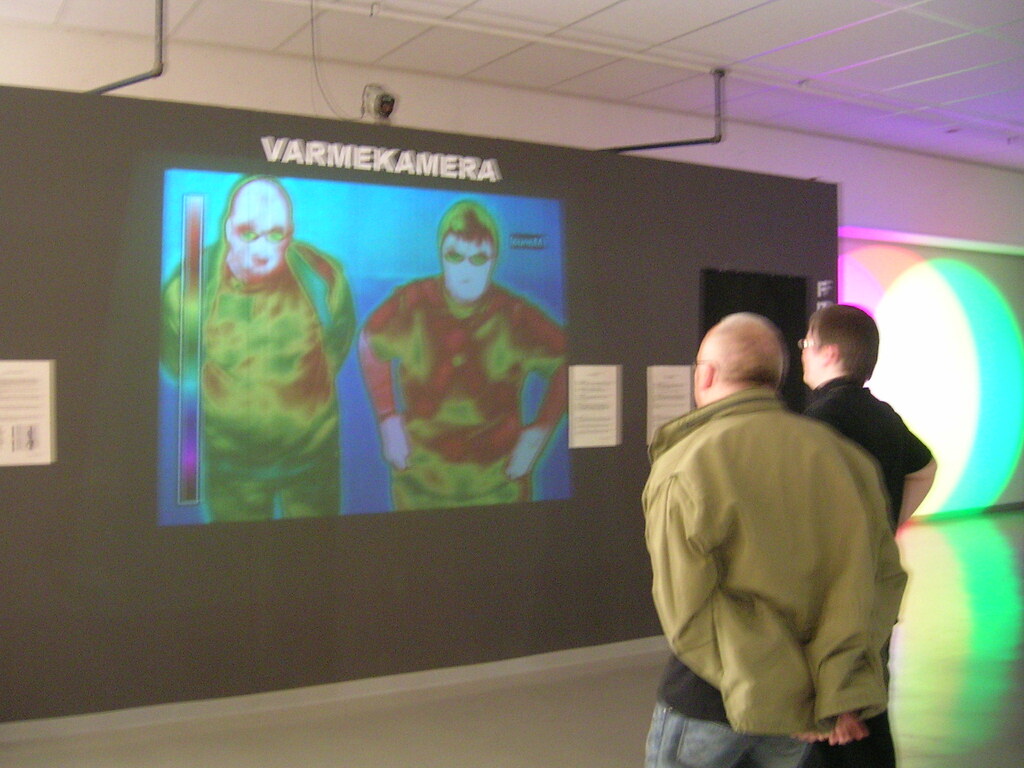
The winner was Medical Faculty, bringing a infrared camera to the Faire. I want one for our Science center! It is an excellent way to display the difference in temperature between the body core and the limbs. I am one of those with constant cold hands and feet, and this cam clearly visualize that I have cold feet and a warm heart.

The week after we visited another faire at Finnsnes, with the same topics as in Tromsø. We also visited a TechFest at Skjervøy the same week, where all 4th and 10th graders in five counties were offered a variety of science activities in one day.

June 26, 2007

Weather

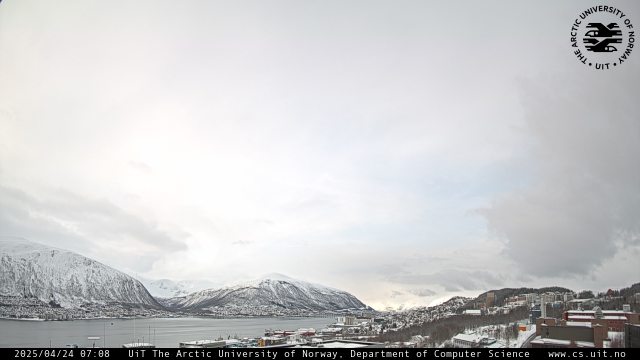
Living in a country stretching 1800 km North-South, with a very elongated form, comprising fjords and mountains, most Norwegians are very concerned about the weather. The weather varies a lot, and the regional differences are often extensive. Where I come from, we are used to having three seasons in a day, every day. It is just the way it is - and we have a saying sounding something like this: "There is no bad weather, only bad clothes". If you will see this yourself; take a look at our local university's weathercam. At this site you will find years of weather statistics and great time-lapse videos.

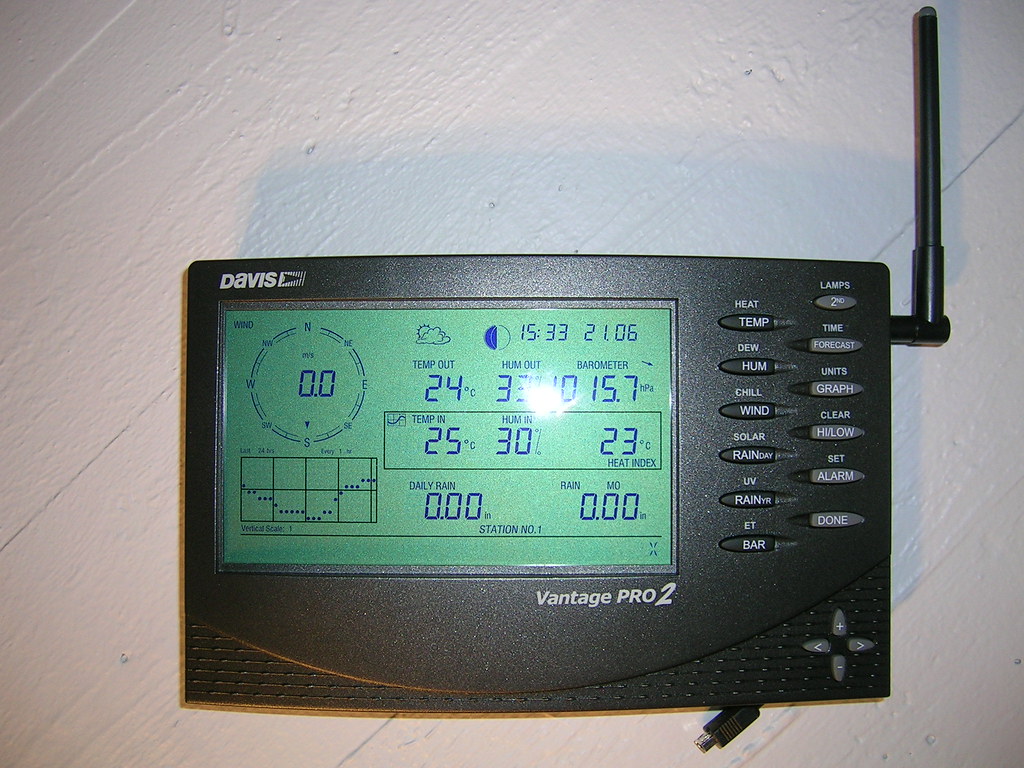
Because of our above-average interest of the weather, we have a topic at the Science Centre called "Climate and weather". We have just started developing teaching material within this topic, and will spend some time testing and improving this. Last fall we bought a weather station from Davis called Vantage Pro2, and because of ground frost we had to wait until this summer to install it. Only last weekend we managed to get it running, and now during the first Science Club week we are testing it for the first time. Marte and I spent several days last week making a visual display to accompany the indoor panel to the weather station. We made a board where the kids can display their weather readings from the last 24 hours and a map of Northern Norway where they can create their own weather forecast.
Other science centres with more money at hand than we have, have hi-tech versions of this, with a professional TV studio with blue-screen technology. Although we could wish for something sophisticated like that, we are still pleased with our homemade pre-tech version.

The UV Animal

With July a few days away, here is a craft activity with a scientific twist. From a number of science toys dealers you can buy pony beads sensitive to UV light. I have bought mine from Educational Innovations - 240 beads for $6.95. Out of the sun they are white, and when they are in the sun they change to various colours like yellow, orange, red, purple and blue. This is an excellent reminder to use suntan lotion if you have tender skin like me.

The webshops suggests making a simple bracelet of the beads, and that works well with small kids. For kids aged 7 and up (and boys who don't want to use bracelets), a colleague of mine, Anne Bruvold, has made a different product of the pony beads. She has called it "The UV Animal" (UVdyret), and here is a description of how to make it:

You need 25 UV beads, 2 normal pony beads (for eyes) and 70 cm elastic band. Start at the tail end, tread one bead onto the elastic band and make sure the two ends are of the same length. Continue with the next beads as the drawing underneath shows, and take care to get the body and the legs assembled correctly. If you want to make the animal with beads of specific colours, take them outdoors to "activate" them before you choose which ones to use. Good luck!
I have made a number of these and have attached them to bags and rucksacs. You can also put it on your throusers, like this boy has done.

May 09, 2007

The International Polar Year

March 1st the International Polar Year was launched, running till March 1st 2009. IPY is a large scientific programme organized through the International Council for Science (ICSU) and the World Meteorological Organization (WMO).

It is actually the fourth Polar Year, the previous ones were in 1882-3, 1932-3, and 1957-8. And this time the workforce and money put into it is bigger scaled than ever. More than 200 projects, 50 000 researchers and 60 countries are collaborating to give us new knowledge about the atmosphere, ice, land, oceans, people and space. It's a long year, you might say, but it is two years on purpose. This way the scientists will get two field seasons both in the Arctic and the Antarctic.

IPY has four headlines or urgencies as they call it; Changing Snow and Ice, Global Linkages, Neighbours in the North and Discovery.

In addition to the research program, IPY also focuses on public awareness and education. Lots of activities are launched at the international site, and also at various national sites (Norway, Australia, Canada, France, Germany, Russia, Spain, Sweden, United States, others).

My Science Center is involved in a project called SciencePub, focusing on "Arctic Natural Climate and Environmental Changes and Human Adaptation: From Science to Public awareness".


Right now the scientist are working in the field both on land and at sea, in Norway, Russia, Greenland, the Fram Strait and Svalbard. At the end of September the results from this first field season should start coming, and I will report more from SciencePub then.

May 08, 2007

Bill Gates Trust Fund secures the Svalbard Global Seed Vault

The region of my Science Center is the largest in Norway. Situated in Tromsø, our region reaches 1200 km south, 900 km east and 1800 km north of Tromsø. Our region covers 30% of Norway's land area, but only 10% of the population. To the north we have to travel two hours by plane, if we wish to visit the local school at Longyearbyen, situated at 78 degrees North at the Svalbard archipelago. Going there we need to pay attention to the cold and dark winters, and the Polar Bear. But despite the harsh conditions, it is a wonderful place to be. There is nothing like it, and you have to see it for yourself, I do not know how to describe it the way it deserves to.

Svalbard has had some news coverage lately. The Svalbard Global Seed Vault, nicknamed the "Doomsday Vault" by the media, is being built as we speak, outside Longyearbyen at an abandoned mine. The Arctic Seed Vault will rescue and store 95% of the biological diversity of the world's food crops, and will function as a backup for many of the international gene banks around the world. Several gene banks are vulnerable because of inadequate maintenance capacity, natural disasters or conflicts.

The Seed Vault is organized and run by the Global Crop Diversity Trust, which has recieved £ 16.8 million from The Bill & Melinda Gates Foundation and £ 4.2 million in matching funds from the Minestry of Foreign Affairs. This is sufficient to deposit 450 000 distinct seed samples in the Svalbard Vault, securing 21 of the world's most important food crops. The Trust was founded by the UN Food and Agricultural Organisation and Biodiversity International, aiming to conserve the biological diversity of food crops in developing countries.

April 22, 2007

Earth Day and World Environment Day

Today the 22nd of April is Earth Day, and has been so since 1970, when it was initiated by Gaylord Nelson, a United States Senator from Wisconsin. (Not to be cunfused with the United Nations Earth Day, celebrated each year on the vernal (March) equinox.) According to Wikipedia April 22nd is celebrated by 500 million people in 175 countries. I must admit, I had not heard of the day until today. Reading the news of a Norwegian newspaper, I became aware of the way Google celebrated the day. Their logo today is a sinking iceberg, and by clicking the logo you get a list of hits as if you had seached for "Earth Day". Top ranked is the Earth Day Network, a nonprofit organisation coordinating the events worldwide. They use the slogan " A call for Action on Climate Change", and ask you to get involved in different ways. One is Project Switch, asking you to save energy by changing your inefficient light bulbs. They are also asking people to be Carbon Neutral, by "Reduce what you can, offset what you can't".

Carbon neutrality is a hot topic in Norway. Because of our oil production, we are one of the countries exceeding our emissions of carbon dioxide as decided by the Kyoto-protocol. This is something we are not willing to accept anymore, with Gro Harlem Brundtland as one of our former Prime Ministers we wish to aim higher. Brundtland was Chair of the World Commission on Environment and Development (WCED), referred to as the Brundtland Commission, developing the political concept of sustainable development and published its report Our Common Future in April 1987.

After releasing the 4th Assessment Report by the Intergovernmental Panel on Climate Change in February, the awareness of the consequences we are facing has hit the ceiling. Everyone is talking about it here in Norway. Even our Prime Minister Jens Stoltenberg. A few days back he proclaimed that Norway would reduce the emission of carbon by 30 % by the year 2020 and become carbon neutral (100 %) by the year 2050. The last goal seem like a fairytale, but I am proud that we have a government that finally has understood the importance of action to save our planet as we know it.

The Chairman of the 4th Assessment Report, Dr Rajendra K. Pachauri, is coming to Tromsø June 5th, which is the United Nations World Enviroment Day. Tromsø is hosting the main celebrations of the day, which is commemorated each year on this date. This year the agenda is "Melting Ice - a hot topic?". In Tromsø there will be a conference and many other events focusing on the topic. The Science Center is going to participate, teaching children about ice the whole "Environment Week".

Wherever you are, you should celebrate the day. The topic is to important to leave unnoticed. UN are suggesting 77 ways of celebrating June 5th, by the World Environment Day Alphabet. And at the Science Center we know of more ways to do it. If you are interested in teaching this at your school, sharing this with your kids or just try it for yourself, don't hesitate to contact me.

April 18, 2007

Computer controlled small scale greenhouse

A project I have wanted to test for some time now, is developed by Dag Atle Lysne, Bjørn Tore Esjeholm and Stig Misund at the Finnmark University College. By using the Robolab products from Lego, you can build and program an automated small scale greenhouse. According to the developers it requires about 12 hours to complete this process. After finishing the building and the programming, this greenhouse is a nice tool to sample various plant growth information. The project description of the greenhouse project is in Norwegian, but I can translate it if anyone wants it in English.

I have discussed this project with author Dag Atle Lysne, and he had several suggestions to alternative materials and programming tools. By using Lego bricks, there are some problems with the door solution. The door tend to become either to heavy for the motor or not solid enough to tolerate the frequent opening and closing to regulate the heat. Lysne suggested using other materials like wood, metal, plexiglas or plastics to lower the weight, and combine it with some Lego components.

He also told me he had tried using other programming tools, to increase the difficulty level and gain experience with other tools than Robolab. I do not know which tools he referred to, but I will try to figure it out if anyone are interested.
[Update: A friend of mine, Rob, has written a post about our science center, and suggests some other tools for programming. Thanks!]